
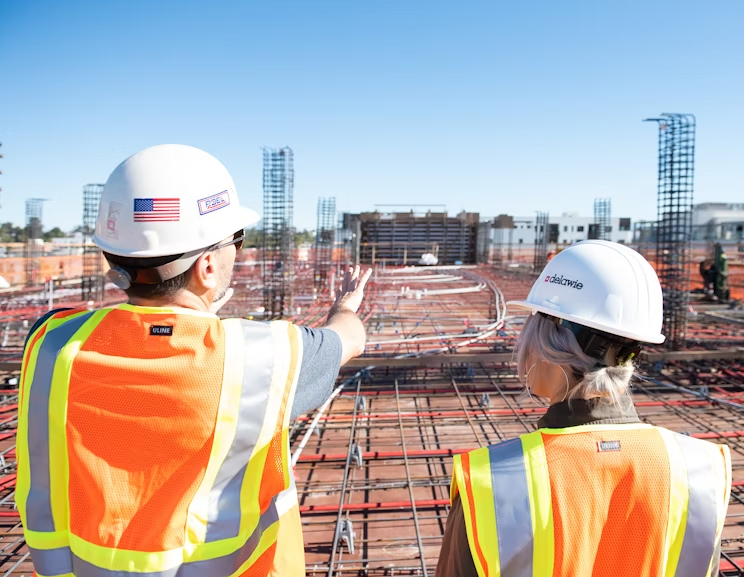
What do construction workers wear?
Construction workers typically wear work clothes and hard hats while working on a construction site. They also typically wear safety glasses and work gloves for protection. Depending on the construction site and the job description, some workers may also wear additional safety clothing and gear. It is crucial for construction workers to always wear appropriate personal protective equipment (PPE) to help prevent accidents and injuries.
Core Protection Requirements for Construction Workwear
Construction sites are multi-hazardous environments, and workers' protective gear must be able to address a variety of potential risks. The primary consideration is fall protection, which, according to OSHA statistics, is the leading cause of fatalities in the construction industry. Next in line is impact and cut protection, as sharp objects and heavy equipment are ubiquitous on construction sites. High visibility is also crucial, especially when working in low-light conditions or in high-traffic areas. The internationally recognized EN ISO 20471 standard categorizes high-visibility clothing into three levels, with Class 3 providing the highest level of visibility suitable for the highest-risk construction environments.
It's worth noting that the protective needs of different types of workers vary significantly—those working at height require a full-body fall arrest system, while those working on the ground may require more protection against impact and puncture.
Basic Protective Equipment System
Head protection is the first line of defense for construction safety. A hardhat that meets the EN 397 standard can withstand the impact of a 3 kg object dropped from a height of 3 meters. Modern hardhat design has been significantly improved, reducing weight by 30% while increasing protection by 50%. In extremely cold conditions, a cold-weather liner can be added to maintain head warmth, while an integrated visor effectively protects the eyes from bright sunlight.

For torso protection, high-visibility workwear is essential. High-quality high-visibility clothing uses a fluorescent background material with reflective strips, providing visibility up to 500 meters during the day and up to 200 meters at night when illuminated by headlights. We recommend using FRDURATEX® fabric, a highly breathable material that not only meets the EN ISO 20471 standard but also offers basic flame retardancy. The modular design of the workwear allows for flexible seasonal adjustments—a thermal liner can be added in winter, while some components can be removed for enhanced breathability in summer. The specially designed underarm ventilation system and breathable mesh back panel effectively reduce body surface temperature by 3-5°C, significantly improving working comfort in hot weather.
Professional Construction Scene Protection Solutions
Workers working at heights require a complete fall arrest system, not just a safety harness. A full-body harness that complies with the EN 361 standard is essential, distributing the impact force of a fall across multiple parts of the body and reducing the risk of injury. The accompanying EN 355 shock cord absorbs energy during a fall, limiting the impact force to less than 6kN. Foot protection is also crucial. Anti-slip safety shoes that meet the EN ISO 20345 S3 rating are not only puncture-resistant, but also feature a special sole design that provides reliable grip on slippery surfaces at a 30-degree incline. These shoes typically feature a steel toe cap and can withstand an impact energy of 200 joules, equivalent to a 4 kg object dropped from a height of 1 meter.

Welding requires specialized protection. Flame-retardant clothing rated EN ISO 11611 Class 2 protects against heat shocks up to 100 joules/cm², equivalent to four seconds of direct flame contact. The accompanying leather welding gloves are not only flameproof but also withstand brief exposure to temperatures up to 500°C. Our specially developed arc-resistant fabric excels in welding protection. Its unique fiber structure rapidly expands to form a protective layer when exposed to flying sparks. For facial protection, the auto-darkening welding helmet switches from shade 3 to shades 9-13 the instant the arc is triggered, protecting the eyes from intense light with a reaction time of just 1/20,000 of a second.
Solutions for Special Environments
Extreme climates pose significant challenges for construction workers. In high-temperature environments, UPF 50+ sun-protective workwear blocks 98% of UV rays, while its specialized fabric structure promotes sweat evaporation and dissipates heat. Our projects in the Middle East have demonstrated that this type of clothing can reduce the incidence of heat-related illnesses by 70%. Cold environments require cold-weather gear, whose insulation value (IREQ) accurately indicates its warmth performance at different temperatures. Removable thermal inner layers allow workers to adjust to temperature fluctuations without sacrificing operational flexibility.
Industry Regulations and Responsibilities
Construction safety is not just a personal matter; it's a legal responsibility. According to OSHA regulations, employers are obligated to provide employees with appropriate personal protective equipment (PPE) and train them on its proper use. We recommend that companies establish a comprehensive PPE management system, including regular inspections, professional cleaning, and timely replacement. A real-world example: A large construction company reduced its site traffic accident rate by 83% by fully upgrading its equipment to EN ISO 20471 Class 3 high-visibility gear, coupled with systematic training.
Training is also crucial. Proper fit directly impacts protective effectiveness—a loose harness can cause injury in a fall, while an improperly worn hard hat can reduce protective effectiveness by 40%. We recommend conducting brief monthly safety gear inspection drills to ensure every worker is using their protective gear correctly. Remember, the best protective gear is useless if not used correctly.
