

What kind of jackets do construction workers wear?
Working on a construction site means you are exposed to all kinds of weather and hazards. The wrong jacket can leave you unprotected, uncomfortable, and unsafe on the job.
Construction workers wear jackets that are durable, weather-resistant, and often high-visibility[^1]. Depending on the job, they may also need specialized jackets with flame-retardant (FR) or arc-rated (AR) properties to protect against specific thermal hazards like flash fires or electrical arc flashes.
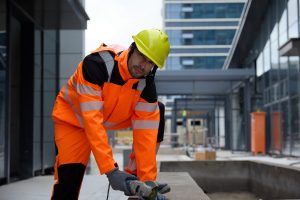
Choosing the right jacket is a critical part of your personal protective equipment (PPE). It’s not just about staying warm or dry. It’s about ensuring you are visible to heavy machinery operators, protected from sharp materials, and shielded from potential fire or electrical risks. The jacket you choose can be the difference between a productive day and a serious accident. Let's break down exactly what you need to look for to make sure you're properly equipped for the demands of the job.
Any bright-colored jacket is suitable for construction work.False
For a jacket to be considered high-visibility, it must meet specific standards like ANSI/ISEA 107, which dictates the color, amount of reflective material, and design.
The terms 'waterproof' and 'water-resistant' mean different things for a jacket.True
Water-resistant jackets can handle light rain for a short period, while waterproof jackets with sealed seams offer protection against heavy, sustained rain.
What are the basic requirements for construction jackets?
You bought a jacket that looked tough, but it ripped after a few weeks on the job. It gets soaked in the rain, making you cold and miserable all day.
This constant discomfort and need for replacement is frustrating and costly. More importantly, a failing jacket compromises your safety, leaving you vulnerable to the elements and job site hazards.
A proper construction jacket must meet three core requirements: durability], weather resistance, and visibility. Understanding these basics helps you select a jacket that will last and keep you safe.

When I first started in this industry, I saw firsthand how quickly poor-quality gear fails. That's why I now focus on the non-negotiable features of any good construction jacket. It's not just about the brand name; it's about the underlying quality that keeps you protected day in and day out. Let's dive deeper into what makes a jacket truly "construction-grade."
Durability
A construction jacket has to withstand constant abrasion, snags, and stress. Look for jackets made from heavy-duty materials like duck canvas, ripstop nylon, or thick polyester. These fabrics resist tearing and wear. Pay close attention to the construction. Features like triple-stitched seams and reinforced fabric on the elbows and shoulders add years to a jacket's life. The zippers should also be large and sturdy, easy to use even with gloves on.
Weather Resistance
Staying dry and warm is essential for both comfort and safety.
- waterproof vs. water-resistant: A water-resistant jacket will shed light rain, but a waterproof one is necessary for heavy downpours. Look for jackets with sealed or taped seams, which prevent water from leaking through the stitching.
- Windproof: A windproof layer is crucial for preventing wind chill, which can make you feel much colder than the actual temperature.
Visibility
Being seen on a busy construction site is a matter of life and death. A high-visibility jacket should be made in fluorescent colors like yellow-green or orange-red. It must also have retroreflective stripes that shine brightly when hit by headlights in low-light conditions.
| Feature | What to Look For | Why It Matters |
|---|---|---|
| Durability | Duck canvas, ripstop fabric, triple-stitched seams | Resists tears, snags, and daily wear and tear. |
| Weather Resistance | Taped seams, waterproof/windproof membrane | Keeps you dry and warm, preventing hypothermia. |
| Visibility | Fluorescent colors, retroreflective tape | Ensures you are seen by vehicle and equipment operators. |
Cotton is the most durable material for a construction jacket.False
While heavy cotton canvas is tough, it absorbs water, becomes heavy, and loses its insulating properties when wet. Synthetic materials like nylon and polyester offer better durability and weather resistance.
Reinforced stitching in high-stress areas like elbows and shoulders significantly increases a jacket's lifespan.True
These areas experience the most friction and movement. Extra stitching prevents seams from splitting, which is a common point of failure in lower-quality jackets.
What are the common types of construction jackets?
Walking onto a job site, you see a dozen different styles of jackets. The sheer number of options is confusing, and you're not sure which one is right for your specific tasks.
Choosing the wrong type can leave you unprotected from unique hazards. You might be too hot and restricted in a bulky parka or dangerously exposed to sparks in a standard softshell.
The most common types are bomber jackets, parkas, softshells, and specialized FR/AR jackets. Knowing the purpose of each helps you match your gear to your job's demands perfectly. Let's look at each type so you can understand which one fits your needs.
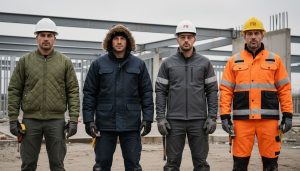
Bomber Jackets
These waist-length jackets are known for their comfortable fit and excellent mobility. With an elasticized waist and cuffs, they stay out of your way while you work. They are a great all-around choice for active jobs in moderate weather.
Parkas
When the temperature plummets, a parka is your best friend. These jackets are longer, typically extending below the waist, and have heavy insulation. They often feature a large, insulated hood and storm flaps over the zippers to block out wind and snow. They are ideal for workers who are more stationary in very cold conditions.
Softshell Jackets
Softshells are all about flexibility and breathability. They are made from a woven fabric that stretches as you move, and they are highly breathable, which helps prevent you from overheating. While they are usually water-resistant rather than fully waterproof, they are perfect for high-exertion work in cool, dry, or drizzly conditions.
Flame-Retardant (FR) and Arc-Rated (AR) Jackets
For anyone working near open flames, welding, or with high-voltage electricity, these are not optional—they are essential PPE. As the founder of Xinke Protective, I built my company on this principle. I saw too many injuries from inadequate gear. Our FR/AR jackets are engineered with materials that won't ignite and continue to burn. They are certified to standards like NFPA 2112 and ASTM F1506, providing life-saving protection against flash fires and arc flashes. This is where a simple jacket becomes a piece of survival equipment.
A softshell jacket is more breathable than a traditional waterproof parka.True
Softshell fabric is designed to allow moisture vapor (sweat) to escape while blocking wind and light rain, making it ideal for active work. Parkas prioritize insulation and waterproofing, which can trap heat and moisture.
You can make a regular jacket flame-retardant by treating it with a spray.False
This is a dangerous myth. True FR protection comes from fibers that are inherently non-flammable or have been chemically treated at the molecular level. Aftermarket sprays offer unreliable, temporary protection that washes out and fails in a real fire.
How do you select a jacket for different seasons?
You wear the same heavy jacket all year, leaving you sweating and overheating in the fall and still freezing on the coldest winter days. This is not just uncomfortable.
Being too hot can lead to dehydration and heat exhaustion, while being too cold can cause hypothermia and slow your reaction times, making you a danger to yourself and others.
The solution is to use a layering system and choose jackets specifically designed for the season. This ensures you remain comfortable, safe, and productive no matter the weather.
Thinking you can get by with one jacket for all four seasons is a rookie mistake. I learned the hard way that being properly dressed for the weather is just as important as having the right tools. A good system doesn't have to be complicated. It's about having a few key pieces that you can combine or wear alone to adapt to any condition the sky throws at you.
Winter
For cold, harsh winters, your primary goal is insulation and protection from wind and moisture.
- Insulation: Look for jackets with synthetic insulation, which stays warm even when damp.
- Outer Shell: The outer layer must be waterproof and windproof. A longer parka style offers more coverage.
- Features: An insulated hood, storm cuffs, and a draft-blocking waist are essential features to seal in warmth.
Spring and Fall
These transitional seasons are all about versatility. The weather can change in an instant.
- 3-in-1 Systems: These are my top recommendation. They consist of a waterproof outer shell and a zip-in liner (usually fleece or a light softshell). You can wear the pieces together for warmth and rain protection, or wear either one separately.
- Softshell Jackets: A good softshell is perfect for cool, active days when you don't need full waterproofing.
Summer
In the summer, protection from rain and ensuring visibility are still important, but you need to avoid overheating.
- Lightweight Rain Shells: A thin, breathable, waterproof jacket is essential for summer downpours. It should be light enough to pack away when not in use.
- High-Visibility Vests: Often, the best "jacket" for summer is no jacket at all. A high-visibility mesh vest worn over a t-shirt provides the necessary safety without adding heat.
| Season | Recommended Jacket Type | Key Features |
|---|---|---|
| Winter | Insulated Parka or Heavy Bomber | Waterproof, windproof, heavy insulation, hood |
| Spring/Fall | 3-in-1 Jacket or Softshell | Versatile layers, water-resistant, breathable |
| Summer | Lightweight Rain Shell or Hi-Vis Vest | Breathable, waterproof (shell), lightweight |
A 3-in-1 jacket system offers the most versatility for year-round use.True
It combines a waterproof shell and an insulating liner that can be worn together or separately, effectively creating three different jackets to handle a wide range of weather conditions.
In winter, the thickest jacket is always the best choice.False
Layering is more effective. An overly thick jacket can cause you to sweat during physical activity. That moisture then cools rapidly when you stop, making you colder than if you had worn several thinner, breathable layers.
What industry standards and certifications should you look for?
You see labels on jackets with codes like "ANSI 107" or "NFPA 2112," but you have no idea what they mean or why they matter.
Ignoring these certifications is a huge risk. It could mean your "high-visibility" jacket isn't visible enough or your "flame-resistant" gear will fail in a fire, leading to fines or severe injury.
Understanding key industry standards is the only way to guarantee your jacket has been tested and proven to provide the protection it claims. It turns a guess into an informed decision.
At Xinke Protective, certifications are the foundation of everything we do. Our mission is to provide workers with safety equipment that meets or exceeds international standards. We don't just say our gear is safe; we prove it through rigorous, independent testing. Our facilities are certified to ISO 9001 for quality control, and our products are certified to the highest global standards. Let's review the most important ones you should look for.
High-Visibility: ANSI/ISEA 107
This is the American standard for high-visibility safety apparel. It specifies requirements for the amount of fluorescent background material and retroreflective tape.
- Class 1: For workers in low-risk areas away from traffic.
- Class 2: For workers near traffic moving under 25 mph.
- Class 3: For workers in the highest-risk environments, near fast-moving traffic. This offers the maximum level of visibility.
Flame and Arc Resistance: NFPA 2112 & ASTM F1506
These are critical for anyone in the oil and gas, utility, or welding industries.
- NFPA 2112: This standard is for protection against industrial flash fires. Garments must pass a comprehensive test, including a 3-second burn on a thermal manikin.
- ASTM F1506: This standard is for workers exposed to electrical arc flashes. Clothing must have an Arc Thermal Performance Value (ATPV), which measures how much heat energy the fabric can block. All our AR clothing at Xinke Protective is clearly labeled with its ATPV rating.
Weather Protection: EN 343
This is a European standard for protection against rain. It rates garments on two scales: water penetration resistance and breathability (water vapor resistance). Look for the highest class possible for both to ensure you stay dry from the outside and the inside.
ANSI 107 Class 3 garments offer the highest level of visibility required for high-risk environments.True
Class 3 requires the largest amount of fluorescent and retroreflective material, including on the sleeves and trousers, to ensure maximum visibility of the human form in complex backgrounds.
If a jacket is flame-resistant (FR), it is automatically rated for arc flash protection (AR).False
These are different hazards. FR clothing is tested for flash fire, while AR clothing is specifically tested for its ability to insulate against the intense thermal energy of an electrical arc. All AR clothing is FR, but not all FR clothing is AR-rated.
Where can you find the best purchasing recommendations?
You're ready to invest in a quality jacket, but you're worried about choosing the right supplier from a sea of online options.
Buying from a non-specialized retailer or an unknown brand online can be a gamble. You might end up with a counterfeit, non-compliant jacket that looks the part but fails when you need it most.
The safest and most reliable approach is to partner with a specialized protective apparel manufacturer. This ensures you get certified, high-performance gear that is durable and cost-effective.
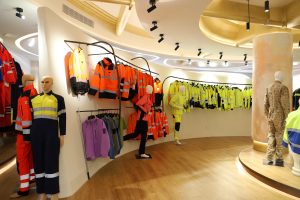
As a global provider of industrial safety solutions, we at Xinke Protective have spent over 20 years perfecting the science of protective clothing. We serve everyone from individual workers to global distributors, offering solutions that prioritize safety without compromise. Whether you're buying for yourself or for your entire crew, here's what you should look for.
Why Choose a Specialist Manufacturer?
A specialist lives and breathes protective apparel.
- Expertise: We understand the standards inside and out because we help shape them. Our state-of-the-art testing lab ensures every single product meets or exceeds compliance requirements.
- Quality Control: With over 28 production lines and 800 skilled professionals, we control every step of the process, from the fabric weave to the final stitch. This is how we guarantee performance.
- Innovation: We are constantly developing new fabrics and designs to make safety gear more comfortable, durable, and protective.
For Individual Workers and Safety Managers
Look for a supplier with a proven track record and transparent certifications. On our website, antifireclothing.com, we clearly list all our certifications, including UL, CE, and compliance with standards like NFPA 2112 and ANSI 107. This transparency is your assurance of quality.
For Distributors and Bulk Buyers
We understand your need for cost-effective solutions that meet diverse regional requirements. That's why Xinke Protective offers comprehensive OEM/ODM services. We can partner with you to design and manufacture custom apparel that meets your specific needs for compliance, comfort, and branding, all while leveraging our manufacturing scale to ensure competitive pricing.
OEM/ODM solutions allow companies to sell certified safety gear under their own brand name.True
Original Equipment/Design Manufacturing (OEM/ODM) is a service where a specialist like Xinke Protective produces products for another company to sell. This allows distributors to offer high-quality, compliant gear without needing their own factories.
The cheapest jacket available is always the most cost-effective choice in the long run.False
A cheap, non-compliant jacket may need to be replaced multiple times and offers poor protection, increasing long-term costs and safety risks. A durable, certified jacket is a better investment.
Conclusion
Choosing the right construction jacket is a critical safety decision. Prioritize durability, weather protection, visibility, and any job-specific certifications like FR or AR to ensure you stay safe and productive.
References
[^1]: Understanding high-visibility standards ensures safety on job sites, preventing accidents.
