
What Makes Hi-Vis Welding Overalls Suitable for High-Risk Environments
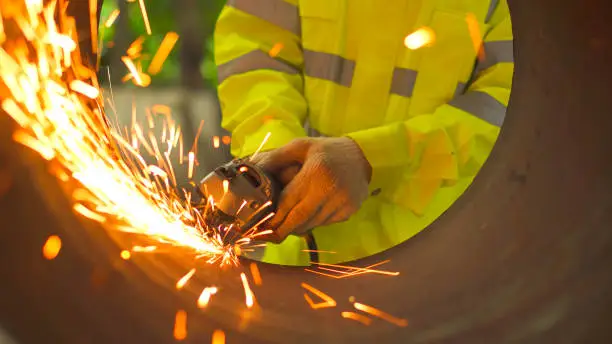
In construction, shipbuilding, energy facilities, and heavy industry sites, welding operations are often accompanied by multiple safety risks: high-temperature sparks, molten metal splashes, intense light radiation, overlapping work areas with mechanical equipment, and complex personnel and vehicle traffic. In such high-risk environments, ordinary welding suits are no longer sufficient to meet comprehensive protection needs. High-visibility welding overalls are a professional protective solution designed specifically for these complex working conditions.
Firstly, high-risk environments demand extremely high visibility for workers. In construction sites, nighttime work areas, or low-visibility environments, welders often need to work near lifting equipment, forklifts, and construction vehicles. High-visibility welding overalls significantly improve the wearer's visibility under natural and artificial light through a combination of fluorescent fabrics and high-performance reflective strips. This visibility is not just about being "conspicuous," but requires meeting the brightness, chromaticity, and reflectivity requirements of international high-visibility standards such as EN ISO 20471, effectively reducing the risk of collisions and operational errors in dynamic, high-noise industrial environments.
Secondly, welding operations themselves place extremely high demands on the flame-retardant and heat-resistant properties of clothing. High-visibility welding overalls must possess reliable flame-retardant protection while maintaining high visibility. Professional products typically use flame-retardant fabrics that comply with EN ISO 11611 standards, preventing continuous burning and dripping when exposed to welding sparks or short-term open flames, thus avoiding secondary injuries. This is particularly crucial in high-risk environments, as welders often cannot escape the source of danger immediately, and the self-extinguishing properties of the clothing directly relate to personnel safety.
Thirdly, high-risk work environments are often not characterized by a single hazard, but rather by multiple overlapping risks. Welders may face thermal, mechanical, and environmental risks simultaneously, requiring a "multi-functional integrated" design approach for protective clothing. Hi-vis welding workwear reduce exposed areas through their one-piece design, preventing sparks or slag from entering through clothing gaps, while reinforcing structural design in critical areas, such as double-layer fabrics, reinforced stitching, and high-temperature resistant accessories. This overall protective design is more suitable for complex, high-intensity industrial sites than ordinary two-piece garments.
Furthermore, truly effective hivis welding clothing for high-risk environments do not only focus on the main fabric itself. Reflective tapes, stitching, zippers, and accessories also need to possess flame-retardant and high-temperature resistant properties. If the reflective tape melts or burns at high temperatures, it will not only lose its visibility function but may also cause harm to the wearer. Therefore, professional high-visibility welding coveralls typically use flame-retardant reflective tape and flame-retardant sewing thread, and undergo whole-garment testing to ensure the stability of overall protective performance under real working conditions.
In long-term wear and high-intensity work scenarios, comfort is also a crucial factor in high-risk environments. Overly thick or stuffy protective clothing can easily lead to fatigue and decreased concentration, thus increasing the risk of accidents. High-quality high-visibility welding coveralls, while ensuring safety compliance, utilize reasonable fabric weight selection, breathable structural design, and ergonomic tailoring to help welders maintain relative comfort during prolonged work, thereby improving work safety and efficiency.
In summary, high-visibility welding coveralls are suitable for high-risk environments not because of a single function, but because of their comprehensive performance in visibility, flame-retardant protection, overall structure, and multi-risk adaptability. For companies and procurement parties, choosing high-visibility welding coveralls that meet international standards and have undergone systematic testing is not only compliance with regulations but also a long-term investment in the life safety of workers and the level of on-site management.
