

In the field of industrial safety, protective clothing is like a worker's "second skin," and the requirements for protective clothing vary greatly across different industries. As a protective equipment manufacturer with over 20 years of professional experience, we will thoroughly analyze the key points for selecting protective clothing for the three high-risk industries of construction, power generation, and mining, helping you build a precise protection system.
Protective clothing for the construction industry: Abrasion and tear resistance are fundamental.
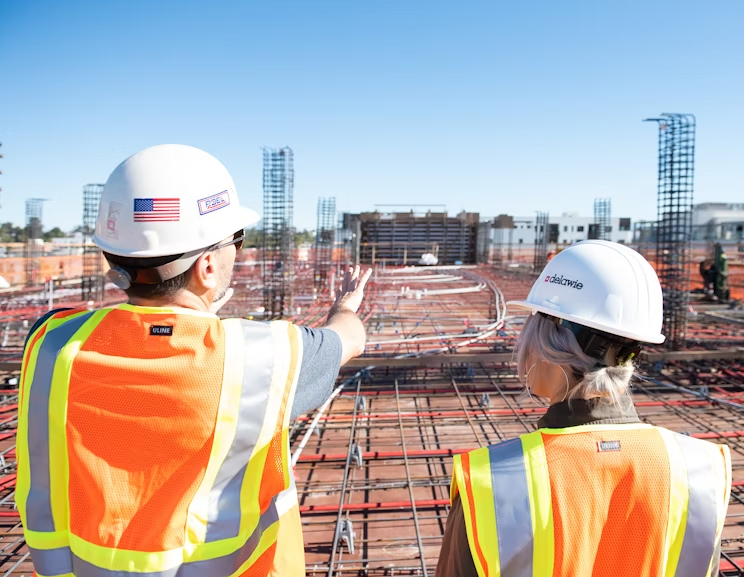
Protective clothing for construction sites must first withstand the harsh environment. We recommend high-density polyester blended fabrics, which offer excellent tear resistance and effectively resist scratches from sharp objects such as rebar and scaffolding.
In terms of color selection, we recommend using high-visibility warning colors (such as fluorescent orange or yellow) in accordance with EN ISO 20471, along with 50mm wide reflective strips to ensure clear identification even in dimly lit construction environments. Considering the long hours construction workers spend working outdoors, protective clothing should provide UPF 50+ UV protection and feature double-layer reinforcement in areas prone to wear, such as the chest and knees.
Special Functional Requirements:
1. Concrete Work: Choose protective clothing with an alkali-resistant coating to prevent cement slurry from corroding the fabric.
2. Steel Structure Installation: Adopt a spark-proof design and add flame-retardant tape at the seams.
3. Height Work: Designed with a tool loop at the waist for convenient carrying of measuring instruments.
4. Rainy Season Work: Optional waterproof and breathable membrane to keep the interior dry.
Protective Clothing for the Power Industry: Flame Retardancy and Arc Flash Protection Are Lifeline.
Protective clothing for power industry workers must simultaneously withstand two deadly threats: flames and arc blasts. Our FRARCTEX® flame-retardant and arc-proof fabric, featuring a perfect ratio of flame-retardant cotton and conductive fiber, not only meets the EN ISO 11612 flame retardancy standard but also meets the IEC 61482-1-1 arc flash protection requirements, with an ATPV value exceeding 12 cal/cm².
In terms of structural design, electrical protective clothing must provide "fully enclosed protection":
1. Three-layer Velcro cuffs to prevent arc penetration
2. Stand-up collar to protect the neck
3. Concealed buttons to prevent metal exposure
4. Built-in drawstrings at the trouser legs
Graded Protection Scheme:
1. Low-voltage work (<1kV): Single-layer 4.5 cal/cm² protective clothing
2. Substation maintenance: Double-layer 8 cal/cm² suit + arc shield
3. Ultra-high voltage live work: Three-layer 16 cal/cm² protective clothing + full-face hood
Special Note: All metal parts are strictly prohibited in electrical protective clothing, and all zippers must be made of special arc-proof materials. Use a neutral detergent when washing to avoid damaging the fabric's conductive network and flame retardant properties.

Mining protective clothing: Explosion and anti-static protection are key.
Protective clothing used in mines must simultaneously address three key challenges: explosion protection, anti-static protection, and dust resistance. Our FRECOTEX® protective clothing, developed specifically for the mining industry, uses specially treated anti-static fibers that fully comply with the EN 1149 anti-static standard and effectively prevent gas explosions caused by static sparks.
In terms of functional design, mining protective clothing features the following:
1. No exposed pockets throughout to prevent the accumulation of coal dust.
2. Breathable mesh underarms and back to alleviate the problem of stuffiness underground.
3. Removable dust collar for use with a half-mask.
4. Hidden tool pocket on the back waist for storing emergency equipment such as a self-rescue device.
For different mining environments, we recommend the following:
1.Coal mines: Use dark flame-retardant and anti-static fabrics to reduce the visibility of coal dust.
2.Metal mines: Use more abrasion-resistant 600D Oxford cloth to resist ore scratches.
3.Salt mines: Use anti-corrosion coated fabrics to resist brine erosion.

Industry Comparison: Differences from fabric to detail.
1.Construction protective clothing pursues "strength and durability," typically using medium-thick fabrics weighing 450-600g/m² with reinforced joints.
2.Power protection clothing emphasizes "safety isolation," with fabric weights ranging from 280-340g/m², ensuring both protection and operational flexibility.
3.Mining protective clothing emphasizes "intrinsic safety," with every design focused on eliminating potential safety hazards.
In terms of seaming techniques, the construction industry generally uses double-needle, four-thread chain stitching, the power industry requires arc-proof seam technology, and the mining industry prefers hot-melt adhesive strips for sealing. Accessory choices also vary significantly: metal snaps are common in the construction industry, plastic accessories are mandatory in the power industry, and the mining industry tends to favor completely concealed designs.
Remember: high-quality protective clothing should be like "breathing armor," providing comprehensive protection without hindering work efficiency. We recommend that companies establish a protective clothing lifecycle record, documenting every cleaning, maintenance, and damage assessment. Flame-retardant protective clothing generally requires professional inspection after two years of use or 50 washes.
For customized industry-specific protective solutions, our team can provide a full-process service, from risk assessment to product customization, to ensure every worker receives the most appropriate protection. Safety is not a cost; it is the most valuable investment.
