
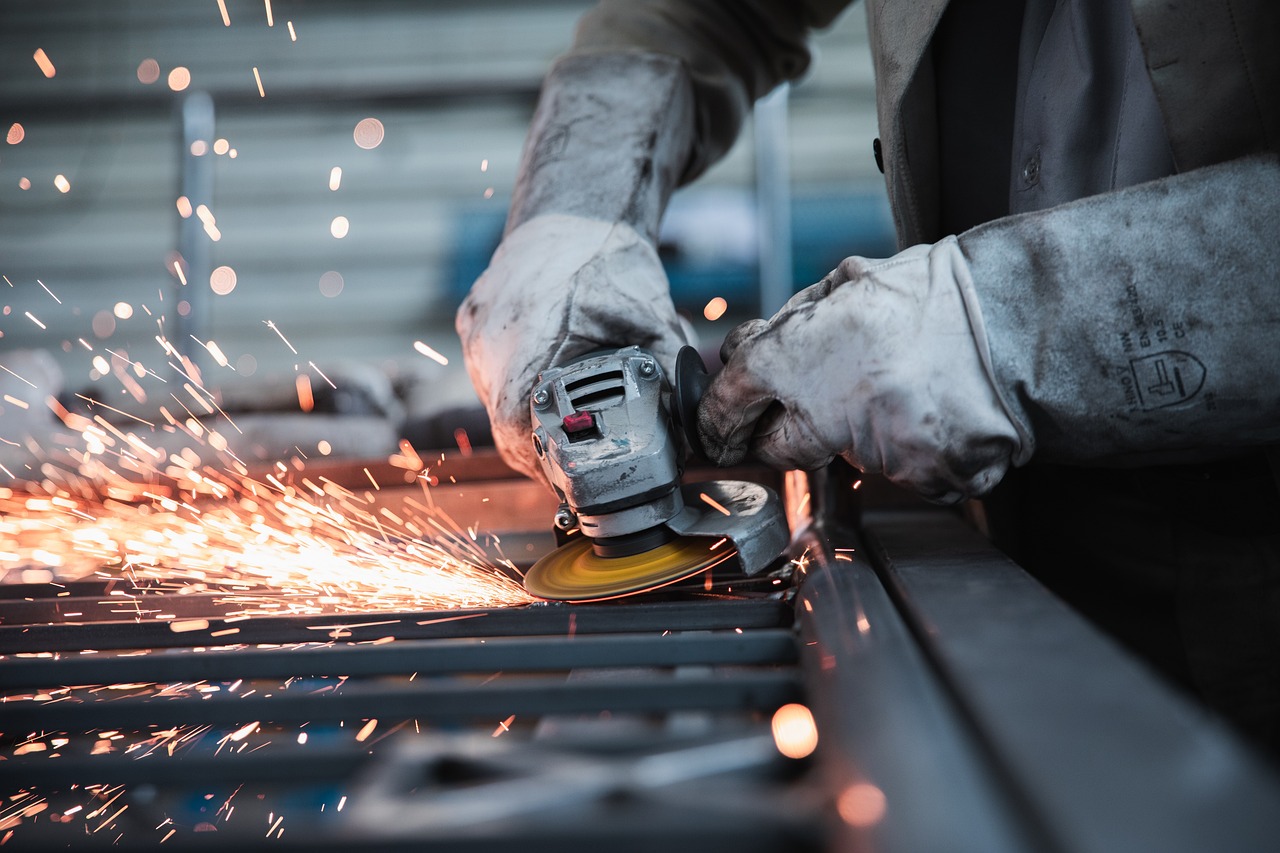
Do welders have to wear FR clothing?
Welding creates intense heat and flying sparks. A simple mistake can lead to severe burns. You need gear that protects you, but is it always required to be flame-retardant?
Yes, welders should always wear flame-retardant (FR) clothing[^1]. While specific regulations vary, FR apparel is essential for protecting against sparks, spatter, and radiant heat. Standard fabrics like cotton or polyester can ignite and melt, causing severe injuries that FR clothing is designed to prevent.

I've been in the safety apparel industry for over 20 years, and I've seen firsthand what happens when corners are cut. A welder thinks a quick job doesn't need full gear, and a stray spark changes their life forever. The question isn't just about rules; it's about your safety every single time you strike an arc. Let's break down why FR clothing isn't just a good idea—it's a critical part of your toolkit. We will explore the hazards, the standards, and what makes for truly effective welding gear.
Any thick fabric, like denim jeans, provides adequate protection for welding.False
While thick cotton denim is better than synthetic fabrics, it is still flammable. It can ignite from sparks and continue to burn, offering insufficient protection against serious welding hazards.
FR clothing is designed to self-extinguish once the source of ignition is removed.True
The primary function of FR fabric is to resist ignition and stop burning when the heat source is gone. This action significantly reduces the severity of burn injuries.
1. What are the real hazards in welding?
You face danger every time you weld. It's not just the bright light. Sparks, spatter, and invisible radiation can cause serious harm. Are you aware of all the risks?
Understanding these dangers is the first step to staying safe. Welding exposes you to thermal, electrical, and radiation hazards[^2]. Each one requires specific protection, and your clothing is your primary defense against the intense heat and molten metal that can cause life-altering burns.
When I started in this field, I learned that you can't see all the dangers. The UV radiation from a welding arc is powerful enough to cause "welder's flash" to your eyes and sunburn on your skin. But the most immediate threat is thermal. Sparks and molten metal can fly several feet and find any gap in your protection. That's why we focus so heavily on creating gear that covers you completely.
Thermal Hazards
The most obvious risk is from heat and fire. This includes contact with hot surfaces, sparks, and molten metal spatter. A single drop of molten metal can burn through normal clothing instantly.
Electrical Hazards
Welding involves live electrical circuits. If your body becomes part of the circuit, you can experience a severe electrical shock. Damp clothing increases this risk dramatically.
Radiation Hazards
The welding arc produces intense ultraviolet (UV) and infrared (IR) radiation. This can cause severe skin burns, similar to sunburn, and long-term exposure increases the risk of skin cancer.
| Hazard Type | Description | Primary Protection Method |
|---|---|---|
| Thermal | Sparks, spatter, open flames, and contact heat. | Flame-Retardant (FR) Clothing, Leather Aprons/Sleeves |
| Electrical | Risk of electric shock from welding equipment. | Dry, insulating clothing; proper equipment maintenance. |
| Radiation | UV and IR rays from the welding arc. | Opaque, full-coverage clothing; welding helmet. |
UV radiation from welding can only damage your eyes.False
UV radiation from a welding arc is strong enough to cause painful burns on exposed skin, similar to a severe sunburn, and can increase long-term skin cancer risk.
Molten metal spatter can reach temperatures over 1,500°C (2,732°F).True
This extreme temperature is why non-FR clothing, which can melt or ignite, is so dangerous. FR fabrics are engineered to withstand this brief, intense exposure without catching fire.
2. Why is FR clothing so essential for welders?
You might think your thick work shirt is enough. But what happens when a piece of molten slag sticks to it? Regular fabrics can ignite and keep burning, turning your clothes into a hazard.
FR clothing is your last line of defense. It is specifically engineered not to ignite and continue burning when exposed to sparks or spatter. This self-extinguishing property is what prevents a minor incident from becoming a catastrophic injury. It's the difference between a close call and a trip to the hospital.

I remember a story a client told me. He was doing an overhead weld when a large piece of spatter fell onto his shoulder. He was wearing one of our FR jackets. The fabric charred where the metal hit, but it didn't catch fire. He brushed it off and kept working. He said if he had been wearing his old cotton shirt, he would have been severely burned. That's the real-world value of this technology. It's not about being fireproof; it's about giving you the crucial seconds you need to react and stay safe.
How FR Fabric Works
Unlike standard clothing, FR fabrics have their protective properties built into the material itself. There are two main types:
- Treated FR Fabrics: These are materials, often cotton-based, that are chemically treated to be flame-retardant. The treatment creates a chemical reaction when exposed to heat, causing the fabric to char instead of igniting.
- Inherent FR Fabrics: These fabrics are made from fibers that are naturally non-flammable, like aramid or modacrylic. The FR protection will never wash out or wear away because it's part of the fiber's structure.
At Xinke Protective, we specialize in both, ensuring we have a solution for every application and budget. The key is that both types are designed to self-extinguish, which is the critical safety feature.
FR clothing is completely fireproof.False
FR clothing is not fireproof; it is flame-retardant. It is designed to resist ignition and self-extinguish once the heat source is removed, which minimizes burn injury but does not make the wearer immune to fire.
The protection in treated FR fabrics can wash out over time.True
If not laundered correctly (e.g., using bleach or fabric softeners), the chemical treatment on some FR fabrics can degrade, reducing their protective qualities over the garment's life.
3. What standards and regulations require FR protection?
Are you just hoping your gear is safe, or do you know it meets industry standards? Following regulations isn't just about avoiding fines. It's about using gear that has been proven to work.
Safety standards exist to save lives. In the U.S., OSHA requires employers to provide protective equipment, including clothing, for welders. Globally, standards like EN ISO 11611 and ASTM F1506 set specific performance requirements for welding and FR apparel, ensuring it offers real protection.
As a manufacturer, we live and breathe these standards. Our facility is certified to ISO 9001, and our products meet a host of international safety norms. When we say a garment is certified to EN ISO 11611, it means it has passed rigorous testing for flame spread, heat transfer, and molten metal splash. These aren't just letters and numbers on a tag; they are a promise of protection that we take very seriously. This commitment ensures that safety managers and workers can trust our gear to perform when it matters most.
Key Welding Safety Standards
Understanding the main standards helps you choose the right gear.
- OSHA 29 CFR 1910.252: This is the U.S. standard for welding, cutting, and brazing. It mandates that employees be protected from sparks and hot metal with appropriate protective clothing.
- EN ISO 11611: This is the European standard specifying safety requirements for protective clothing for use in welding and allied processes. It has two classes: Class 1 for lower-hazard tasks and Class 2 for higher-hazard tasks.
- ASTM F1506: This is a performance specification for textiles used in apparel for electrical workers exposed to arc flashes, but its FR requirements are often referenced for other industries, including welding.
- NFPA 2112: This standard focuses on flame-resistant garments for protection of industrial personnel against short-duration thermal exposures from fire (flash fire).
| Standard | Region/Focus | Key Requirement for Welders |
|---|---|---|
| OSHA 1910.252 | USA | Employers must provide and ensure use of protective clothing. |
| EN ISO 11611 | Europe | Garments must pass tests for flame spread and molten metal splash. |
| ASTM F1506 | USA/Global | Fabric must self-extinguish with a char length under 6 inches. |
| NFPA 2112 | USA/Global | Garment must not melt, drip, or have more than 50% body burn in a test. |
OSHA regulations explicitly state that all welders must wear clothing labeled 'FR'.False
OSHA's standard (1910.252) is performance-based. It requires protection from welding hazards but doesn't mandate a specific 'FR' label. However, using certified FR clothing is the most reliable way to meet this requirement.
EN ISO 11611 Class 2 offers more protection than Class 1.True
Class 2 is for higher-risk welding situations with more sparks and spatter, like MMA welding with basic electrodes or MAG welding. Class 1 is for lower-risk tasks.
4. What types of FR clothing are commonly used in welding?
You know you need FR gear, but the options can be confusing. From shirts and pants to coveralls and jackets, what do you really need for your specific job?
The right FR clothing depends on your work. For light-duty TIG welding, an FR shirt and pants might be enough. For heavy-duty stick or flux-core welding with significant spatter, you'll need a durable FR jacket, possibly with leather sleeves, or full coveralls.
At Xinke Protective, we design a wide range of solutions because we know one size doesn't fit all. We talk to welders in the field to understand their daily tasks. A welder working in a fabrication shop has different needs than someone welding on a pipeline outdoors. This feedback drives our innovation. We offer lightweight, breathable FR shirts for comfort in hot climates and heavy-duty, multi-layered jackets for maximum protection in harsh environments. The goal is to provide the right level of protection without hindering your ability to work efficiently and safely.
Common FR Garment Choices
- FR Shirts and Pants: This is the foundational layer. They provide full-body protection for light to moderate welding tasks and are often more comfortable for all-day wear than heavier gear.
- FR Coveralls: Offer seamless protection from neck to ankle, eliminating the gap between a shirt and pants where sparks could enter. They are ideal for jobs that require a lot of movement or work in various positions.
- FR Welding Jackets: These are made from heavier, more durable FR fabrics or a combination of FR fabric and leather. They are worn over an FR shirt and provide an extra layer of protection against intense heat and spatter, especially for chest and arms.
- Leather and FR Hybrids: For the most demanding jobs, garments that combine leather in high-impact areas (like the sleeves and front) with breathable FR fabric on the back offer the best of both worlds: maximum durability and improved comfort.
Wearing a non-FR cotton shirt under an FR jacket is a safe practice.False
If intense heat penetrates the FR jacket, the underlying cotton shirt can still ignite and burn against your skin. It is crucial to wear an FR or natural fiber (like wool) base layer, never synthetics.
Leather is a traditional and effective material for welding protection.True
Leather offers excellent durability and resistance to heat and spatter. However, it can be heavy, hot, and stiff, which is why modern FR fabrics and hybrids are often preferred for comfort.
5. What key features should welders look for in FR apparel?
Beyond the FR label, what makes a garment truly great for welding? It's the small details that can make a big difference in your daily safety, comfort, and the gear's lifespan.
Look for features that enhance safety and functionality. This includes covered snaps and zippers to prevent electrical conductivity, high collars for neck protection, and reinforced stitching in high-stress areas. These details show that the garment was designed with a welder's real-world needs in mind.
When our team designs a new welding jacket, we think like a welder. Where will sparks land most often? On the shoulders and arms. So, we might reinforce those areas. How can we prevent a spark from falling into a pocket? We design pockets with flaps. How do we protect the neck? We add a high, adjustable collar. We also consider the fit. A garment that is too loose can snag on equipment, while one that is too tight restricts movement. We use gusseted underarms and articulated elbows to allow a full range of motion. These thoughtful design elements are what elevate a piece of FR clothing from just compliant to truly protective and practical.
Must-Have Design Features
- Covered Hardware: Snaps, buttons, and zippers should be made of non-conductive material or covered by flaps of FR fabric. This prevents them from heating up and causing a contact burn or conducting electricity.
- Reinforced Construction: Look for double or triple-stitched seams, especially on the shoulders, arms, and sides. Bar-tacking at stress points (like pocket corners) adds durability.
- Protective Collar: A high collar that can be secured tightly protects the neck from sparks and UV radiation, a commonly exposed and sensitive area.
- Adjustable Cuffs: Cuffs with snaps or hook-and-loop closures allow you to create a tight seal around your gloves, preventing sparks from going up your sleeves.
- Pocket Design: Pockets should have flaps to keep sparks and debris out. Internal pockets are even safer.
Zippers on FR clothing are a major burn risk.False
When designed correctly, zippers are safe. On quality FR gear, zippers are typically made of brass (which doesn't hold heat like steel) and are covered by an FR fabric storm flap for complete protection.
A lighter-weight FR fabric is always less protective.False
Not necessarily. The level of protection is determined by the fabric's material composition and its certified ratings (e.g., ATPV or EN ISO 11611 class), not just its weight. Advanced inherent fibers can offer high protection at a lower weight.
6. How do you balance safety, comfort, and durability?
You need to be safe, but you also need to be comfortable enough to do your job well. If your gear is too hot, heavy, or stiff, you might be tempted not to wear it.
The best FR gear doesn't force you to compromise. Modern fabric technology allows for garments that are lightweight, breathable, and flexible while still meeting high safety standards. Look for moisture-wicking fabrics and designs that promote airflow to stay comfortable, and choose reputable brands known for durable construction.
This balance is the core of our mission at Xinke Protective. Our founder started the company because he saw that traditional safety gear was often impractical. It was heavy, hot, and hindered movement. We've invested heavily in R&D to change that. We use advanced materials like aramid blends that are incredibly strong yet surprisingly lightweight. We incorporate features like mesh gas detection loops and vented backs to improve breathability without compromising the protective barrier. We believe that the safest PPE is the PPE that you'll actually wear, and comfort is a huge part of that equation. A comfortable worker is a focused, productive, and—most importantly—safer worker.
The Safety Triangle: Finding the Sweet Spot
| Factor | Why It Matters | What to Look For |
|---|---|---|
| Safety | The primary purpose. Must protect against specific job hazards. | Certified to relevant standards (EN ISO 11611, NFPA 2112). Appropriate fabric weight and material for the risk level. |
| Comfort | Affects worker adoption, focus, and productivity. Reduces heat stress. | Lightweight, breathable fabrics. Moisture-wicking properties. Garment design that allows for movement (gussets, articulated joints). |
| Durability | Determines the long-term value and cost-effectiveness of the garment. | High-quality materials (e.g., aramids). Reinforced stitching and bar-tacking. Colorfastness and minimal shrinkage after washing. |
More expensive FR clothing is always better.False
Price can be an indicator of quality, but the 'best' clothing is the one that matches your specific hazard assessment for safety, comfort, and durability. A high-priced garment might be over-specified for your needs.
Washing FR clothing at home will ruin it.False
Most FR clothing can be safely laundered at home if you follow the manufacturer's instructions. The key is to avoid bleach, fabric softener, and dryer sheets, which can degrade FR properties or coat the fabric with flammable residue.
7. What are the industry best practices for welding safety gear?
Wearing an FR jacket is a great start, but what about the rest of your gear? Comprehensive safety goes beyond a single garment. It's about creating a complete system of protection from head to toe.
A holistic approach is key. This means combining your FR clothing with a proper welding helmet, safety glasses, gloves, and boots. Each piece of gear should be inspected before use, and your clothing should fit properly, with no gaps or exposed skin.

We see ourselves as providers of industrial safety solutions, not just clothing. A complete system is crucial. For example, you should wear an FR balaclava or hood under your welding helmet to protect your head and neck. Your FR jacket cuffs should be secured over your welding gloves, not tucked inside them. Your pants should cover the tops of your leather work boots. Every piece works together. I always tell safety managers to implement a pre-work gear check. It only takes a minute to look for holes, rips, or contamination in your FR gear. This simple habit can prevent a serious injury by catching a failure before it happens.
The Head-to-Toe Checklist
- Head and Face: An auto-darkening welding helmet with the correct shade level is non-negotiable. Always wear ANSI Z87+ safety glasses underneath. An FR balaclava protects the ears and neck.
- Torso and Arms: Wear a long-sleeve FR shirt as a base layer, with a heavier FR or leather jacket for high-amperage or out-of-position work. Ensure there are no gaps.
- Hands: Use leather welding gloves designed for the type of welding you are doing. Gauntlet-style gloves offer wrist and forearm protection.
- Legs: FR pants or coveralls are essential. Never wear pants with cuffs, as they can catch sparks.
- Feet: High-top leather work boots, preferably with metatarsal guards, protect your feet from sparks and falling objects.
This systematic approach ensures there are no weak points in your defense.
You don't need safety glasses under a welding helmet.False
You must always wear safety glasses under your helmet. They protect your eyes from flying debris when the helmet is up and provide a crucial secondary layer of impact protection.
Tucking your pants into your boots is a good way to keep sparks out.False
This is a dangerous mistake. Tucking pants into boots creates a funnel for sparks and spatter to fall into your boot. Always wear your pants over your boots.
Conclusion
Ultimately, wearing FR clothing is a non-negotiable part of a welder's job. It's the most reliable way to protect yourself from the daily risks of fire and burns.
References
[^1]: Understanding FR clothing is crucial for welders to ensure their safety against sparks and heat.
[^2]: Awareness of radiation hazards is key for welders to protect their skin and eyes from damage..
