
Common Myths About Flame Resistant and Arc Rated Protective Apparel
In high-risk industries such as oil and gas, power generation, and chemical manufacturing, flame-resistant (FR) and arc-rated (AR) protective clothing has become essential safety equipment. However, many misconceptions still exist regarding their procurement and use. These misconceptions not only affect protective effectiveness but can also expose workers to additional risks at critical moments. Correctly understanding the true function of FR and AR protective clothing is a crucial prerequisite for improving workplace safety.
One common misconception is that "flame-resistant clothing won't catch fire." In fact, FR clothing is not "fireproof." The true meaning of flame resistance is that the garment will not continue to burn when exposed to flames or high temperatures, and will self-extinguish after the fire source is removed. FR fabrics work by limiting flame spread and reducing heat transfer, thereby reducing the severity of burns, not by completely isolating the wearer from flames. Therefore, even when wearing FR clothing, safety operating procedures must still be followed.
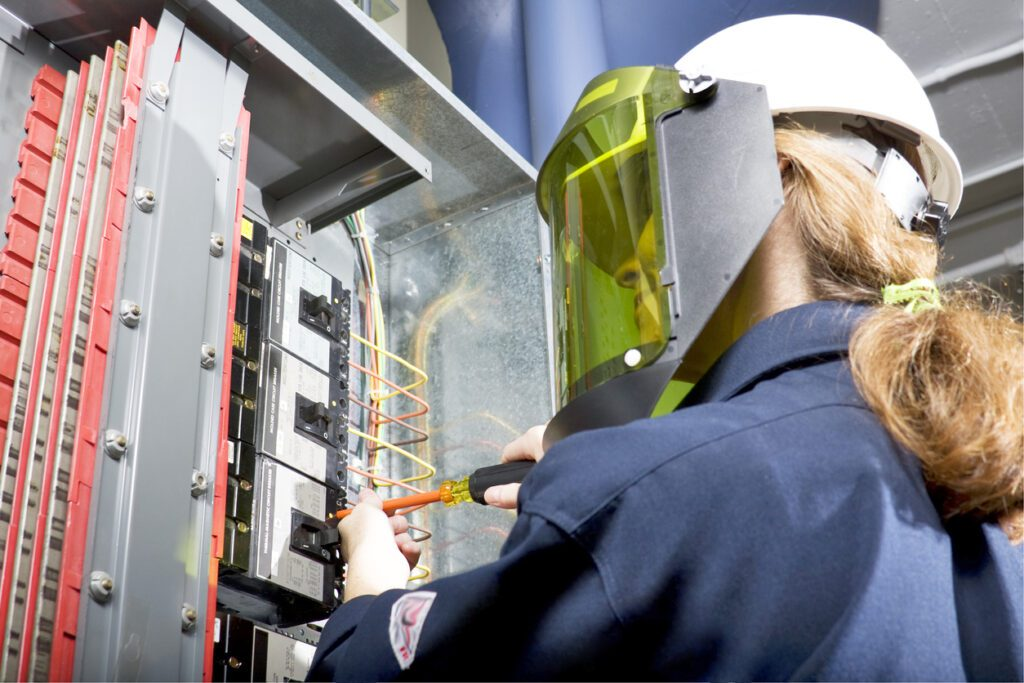
Another widespread misunderstanding is equating FR and AR as the same level of protection. While all AR clothing possesses flame-resistant properties, not all FR clothing provides arc flash protection. AR protective clothing undergoes specialized arc flash testing, and its protective capabilities are quantified by ATPV or EBT values, making it suitable for work environments with arc flash risks. Wearing only ordinary FR clothing in power or high-energy electrical work may not provide sufficient protection.
Some also believe that the "thicker" the clothing, the better the protection. In reality, protective performance is not solely determined by fabric thickness, but rather by fiber structure, fabric composition, and overall design. Modern FR and AR fabrics prioritize lightweight and breathability while maintaining protective levels. Appropriate protective clothing should strike a balance between safety and comfort, avoiding discomfort or overheating that might discourage workers from wearing it for extended periods.

The idea that "the effect wears off after a few washes" is another common misconception about FR clothing. For inherently flame-resistant fabrics, the flame resistance comes from the fibers themselves and will not be lost due to washing under normal industrial laundering conditions. Even fabrics treated with flame-retardant finishes will maintain stable protective performance for the specified period if cleaned and maintained according to the manufacturer's instructions. The key is proper use and maintenance, not simply dismissing its durability.
In practical work, some also overlook the importance of proper layering and combination of protective clothing. Wearing FR or AR tops but pairing them with ordinary cotton or synthetic fiber pants creates a protection gap in the event of an accident. A complete protective system should include tops, pants, inner layers, and necessary auxiliary protective equipment. All clothing that comes into direct contact with the skin should avoid melting risks to truly maximize the overall effectiveness of the protective clothing.
Finally, a commonly overlooked misconception is that FR and AR protective clothing are merely "formal requirements" to satisfy regulations. In fact, high-quality protective clothing not only helps companies pass safety audits but also significantly reduces the severity of injuries in the event of an accident. They represent a people-centered safety philosophy and are an important manifestation of a company's safety culture and sense of responsibility.
With the continuous updating of industry standards and the ongoing advancement of protective technologies, FR and AR protective clothing have far surpassed the scope of traditional personal protective equipment. Breaking these common misconceptions and correctly selecting and using protective clothing is crucial to truly realizing its value in high-risk work environments and providing reliable and lasting safety protection for workers.
