

Is arc flash the same as FR?
Are you confused about safety gear? Choosing the wrong kind can be a serious mistake. Let's clear up the difference between FR and arc flash protection[^1] to keep you safe.
No, arc flash protection and FR (flame-resistant) are not the same. FR clothing is designed to resist ignition and not continue to burn. Arc-rated (AR) clothing is a specific type of FR gear tested to also protect you from the intense thermal energy of an electrical arc flash.
I've seen this confusion on job sites more times than I can count. People think the terms are interchangeable, but that mistake can have devastating consequences. Understanding the specific hazard each type of clothing protects against is one of the most important things you can do for your safety. It’s not just about following rules; it’s about making sure your gear will actually work when you need it most. Let's dig into the details so you can feel confident in the protection you wear every day.
All FR clothing protects against arc flash.False
This is a common and dangerous misconception. Standard FR clothing is tested to resist catching fire, but it is not tested for the massive, explosive thermal energy of an arc flash. Only arc-rated (AR) clothing is appropriate for that hazard.
Arc-rated (AR) clothing is also flame-resistant (FR).True
Correct. To even be considered for an arc rating, a fabric must first pass flame-resistance tests. Think of AR as a specialized, higher level of protection built on an FR foundation.
What Is FR Clothing, Really?
You see an "FR" label and assume you're safe from any fire. But not all FR is the same, and a misunderstanding can lead to serious injury. Here's what it truly means.
FR clothing is made from materials that won't keep burning after a flame is gone. Its main job is to self-extinguish. This prevents the clothing itself from melting or burning onto your skin, which is often what causes the worst injuries in a fire.
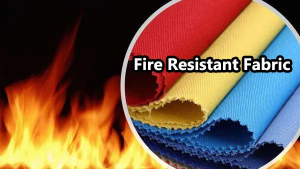
I remember one of the first tests I ever witnessed in our lab at Xinke Protective. We took a regular cotton work shirt and one of our FR shirts and exposed both to a direct flame. The cotton shirt was engulfed in seconds. The FR shirt charred and blackened where the flame touched it, but the second we removed the flame, it was out. It didn't spread. That powerful image has always stuck with me. It’s the perfect illustration of what FR clothing is designed to do: give you those critical seconds to escape the hazard without your clothes making the injury worse.
How FR Works
The core purpose of FR clothing is to provide thermal protection by self-extinguishing. This property can be inherent to the fiber itself (like aramid or modacrylic) or come from a chemical treatment applied to the fabric. Either way, the goal is the same: to not act as fuel.
Common FR Standards
Different regions have different standards, but they all test for a similar outcome.
| Standard | Region | Primary Focus |
|---|---|---|
| NFPA 2112[^2] | North America | Specifies minimum performance requirements for FR garments for protection against short-duration thermal exposures from fire (flash fire). |
| EN ISO 11612 | Europe | Specifies performance requirements for clothing to protect against heat and flame. It includes multiple tests for different types of heat exposure. |
You can wash FR clothing with regular fabric softener.False
Absolutely not. Fabric softeners and some detergents can coat the FR fibers with a flammable residue, completely negating their protective qualities. Always follow the manufacturer's specific washing instructions.
FR clothing is designed to be fireproof.False
FR clothing is not fireproof; it is flame-resistant. It can and will be damaged by fire. Its key safety feature is its ability to self-extinguish, which limits the extent of a burn injury.
So, What Is Arc Flash Protection Then?
You work around energized equipment, but do you know the specific danger of an arc flash? It's an explosive, high-energy event that can be instantly fatal. Let's define this critical protection.
Arc flash protection, found in arc-rated (AR) clothing, is specifically tested to shield you from the thermal energy of an electrical arc. It's measured by an Arc Thermal Performance Value (ATPV), which tells you how much energy the fabric can block before a second-degree burn is likely.

An arc flash isn't just a fire; it's a violent explosion of energy. It can reach temperatures hotter than the sun's surface in a fraction of a second. I've seen the aftermath, and it's not pretty. That's why just being "flame-resistant" isn't enough. Your gear needs to be able to insulate you from that incredible, instantaneous burst of heat. This is where the arc rating comes in. It’s a number that quantifies exactly how much protection the garment offers.
Understanding the Arc Rating (ATPV)
The arc rating is the most important number when it comes to electrical safety. It's expressed in calories per square centimeter (cal/cm²).
- What it means: The rating indicates the amount of incident energy the fabric can block. For example, a garment with a rating of 8 cal/cm² can protect the wearer from an arc flash that produces up to that level of energy.
- How it's used: A hazard analysis of your worksite determines the potential incident energy. You must then wear AR clothing with an arc rating that meets or exceeds that number.
Key Arc Flash Standards
These standards are the backbone of electrical safety PPE[^3].
| Standard | Region | Primary Focus |
|---|---|---|
| ASTM F1506[^4] | North America | The performance specification that all AR fabrics and garments must meet. It requires the material to be FR and to have an arc rating. |
| NFPA 70E | North America | The standard for electrical safety in the workplace. It dictates when AR clothing is required and helps determine the necessary protection level. |
| EN 61482 | Europe | The European standard for protective clothing against the thermal hazards of an electric arc. |
A higher cal/cm² rating means less protection.False
This is incorrect. A higher cal/cm² rating means the garment can withstand more thermal energy from an arc flash, offering greater protection to the wearer.
Wearing multiple layers of AR clothing can increase your total protection.True
Yes, layering AR garments is a common and effective strategy. The total protection is generally greater than the sum of the individual garment ratings, but this should only be done with products designed and tested for layering.
What's the Key Difference Between FR and Arc Flash Clothing?
You're still a bit unsure when to use FR versus AR gear. This confusion can leave you dangerously under-protected in a multi-hazard environment. Here is the simple, crucial distinction.
The key difference is the specific hazard they protect against. FR clothing protects against fire by resisting ignition. Arc-rated (AR) clothing is a type of FR clothing that also protects against the intense thermal energy released during an electrical arc flash event.
I like to use a simple analogy. Think of it this way: all surgeons are doctors, but not all doctors are surgeons. Surgery is a specialty. In the same way, all arc-rated (AR) clothing is flame-resistant (FR), but not all FR clothing is arc-rated. The arc rating is a specialty for a very specific and violent hazard. Your FR coverall might protect you from a flash fire, but it will do almost nothing against the thermal blast of a high-energy arc flash.
Hazard-Specific Protection
The design and testing of the two types of clothing are fundamentally different because the hazards are different. A flash fire is a moving flame front, while an arc flash is a stationary, explosive release of thermal energy. The clothing must perform differently to protect you.
The Testing Tells the Story
The difference becomes crystal clear when you look at how they are tested.
| Feature | FR Clothing | Arc-Rated (AR) Clothing |
|---|---|---|
| Primary Goal | Resist ignition, self-extinguish. | Insulate from intense, short-duration heat. |
| Hazard | Flash fire, embers, molten metal splash. | Electrical arc flash explosion. |
| Key Metric | Pass/Fail on flame tests (e.g., ASTM D6413). | Arc Rating (ATPV in cal/cm²) from ASTM F1959. |
| Relationship | Base-level flame resistance. | Must be FR first, then tested for arc insulation. |
FR and AR are interchangeable terms for safety managers.False
They are not interchangeable. A safety manager who uses them that way is putting their team at risk. FR is a general category; AR is a specific, tested rating for electrical hazards.
An arc rating is determined by exposing fabric to a real electric arc in a lab.True
Yes, the ASTM F1959 test method uses a controlled electric arc to measure how much heat energy passes through the fabric. Sensors behind the fabric determine the point where a second-degree burn would occur.
Are All FR Garments Arc Rated, Then?
You might look at your FR-labeled gear and assume it's fine for electrical work. That assumption could lead to a catastrophic failure of your PPE. Let's answer this critical question directly.
No, absolutely not. While all arc-rated (AR) garments must first be flame-resistant (FR), the vast majority of FR garments are not tested or certified for arc flash protection. You must check the garment's label for a specific arc rating (ATPV or cal/cm²).

I've had conversations with safety managers who bought a large order of "FR clothing" for their entire team, including electricians. They only realized their mistake during a safety audit. The gear was fine for flash fire but had no arc rating, leaving their electrical team completely exposed. It was a costly error that could have been much worse. This is why at Xinke Protective, we are obsessed with clear, easy-to-read labeling. The absence of an arc rating is just as important as its presence.
The Importance of the Label
Your PPE's label is its resume. It tells you exactly what it's qualified to do. For electrical work, you need to see two things:
- Compliance with ASTM F1506: This shows it meets the minimum performance specs for AR clothing.
- An Arc Rating: This will be a number, like "ATPV 8.7 cal/cm²".
If that number isn't there, the garment is not for arc flash protection. Period.
Why the Distinction Matters
The testing for FR and AR is worlds apart. A standard FR test, like a vertical flame test, simply checks if the fabric will continue to burn after being exposed to a small flame for a few seconds. The arc flash test (ASTM F1959) involves blasting the fabric with a massive burst of energy from a real electric arc to measure how much heat gets through. A fabric can easily pass the first test and fail the second one spectacularly.
If a garment's label says 'FR' but has no cal/cm² rating, it is safe for arc flash hazards.False
This is completely false and dangerous. The absence of an arc rating means the garment has not been tested or certified for protection against arc flash. It must not be used for that hazard.
All arc-rated clothing is also flame-resistant.True
This is a foundational principle of electrical safety PPE. A material must first prove it won't act as fuel (be flame-resistant) before it can be evaluated for its insulating properties against an arc flash.
Why Does Choosing the Right Protection Matter So Much?
You might be tempted to cut corners on PPE to save a little money. But the cost of a single serious injury far outweighs the price of proper gear. Here's why this choice is non-negotiable.
Choosing the right protection is about more than just checking a compliance box; it’s about real-world safety. In many jobs, workers face multiple hazards at once. The right gear provides comprehensive protection without hindering comfort or productivity, ensuring you go home safe every day.

As someone who has dedicated my career to this, I believe safety should never be a compromise. You shouldn't have to choose between being protected from an arc flash and being comfortable enough to do your job well. In today's industrial environments, workers face fire risks, electrical energy, and mechanical hazards all at the same time. That's why modern protective clothing is so important. It's not just about one thing anymore.
Beyond Compliance: Real-World Safety
The best safety program is one that people actually follow. If PPE is too heavy, too hot, or restricts movement, workers may be tempted to wear it improperly or not at all. That's why we focus on integrating multiple protective properties. Modern fabrics can now combine flame resistance, arc flash protection, anti-static performance, and even moisture management to keep workers cool and dry. This allows them to stay safe and productive, even in the most demanding environments.
The Value of a Certified Partner
For safety managers and procurement teams, this is where your choice of supplier becomes critical. Partnering with a certified manufacturer like us at Xinke Protective helps guarantee that every single garment is what it says it is. It ensures that the clothing not only meets international standards like NFPA 2112 and ASTM F1506 but is also designed for the real world—with durability, comfort, and long-term value built right in.
Comfort in PPE is a luxury, not a necessity.False
Comfort is a critical component of safety. Uncomfortable PPE is a leading cause of non-compliance. If workers don't wear their gear correctly, it offers zero protection.
Modern protective fabrics can offer multiple protections in one garment.True
Absolutely. Advances in textile science allow manufacturers like Xinke Protective to create single-layer fabrics that are flame-resistant, arc-rated, anti-static, and high-visibility, providing comprehensive and comfortable protection.
Conclusion
FR and AR are not the same. FR resists fire, while AR protects from an arc flash. Always check your garment's label for the specific protection you need.
References
[^1]: Understanding arc flash protection is crucial for safety in electrical environments, ensuring proper gear is worn to prevent serious injuries.
[^2]: NFPA 2112 sets the standards for flame-resistant clothing; learn its importance in ensuring worker safety.
[^3]: Electrical safety PPE is crucial for protecting workers from electrical hazards; explore its importance in workplace safety.
[^4]: ASTM F1506 outlines the performance specifications for arc-rated clothing, ensuring adequate protection against electrical hazards.
